 |

Practice
Areas  Sales Strategy Sales Strategy

RMCI customizes each project to meet the unique needs of each client.
From small, emerging markets to large, global markets; from hospital
and street markets to dispensing and prescribing markets; from simple
to complex markets, RMCI is flexible and experienced in improving
sales force strategy.
No two projects are exactly alike. To give you an idea of a 'typical'
sales force strategy project, we've developed the information below.
For specific examples of our work, please visit our online case
studies.
|
|

Results and Benefits
Objectives
Considerations
Process & Timeline
Findings
Analysis
|
|
Men's Baltimore Ravens New Era Black NFL Draft 59FIFTY Reflective Fitted Hat,Men's Seattle Seahawks Brown Billfold http://www.hotseattleseahawksjerseys.com.New England Patriots Lumbar Cushion,Mens Green Bay Packers Aaron Rodgers Nike Green Elite Jersey,'47 Brand Minnesota Vikings Infant Little Monster Knit Hat - Purple.Men's Seattle Seahawks New Era College Navy Fan Training Camp Reverse Bucket Hat,Women's St Seattle Seahawks Jerseys Outlet. Louis Rams 5th & Ocean by New Era White Baby Jersey Varsity Long Sleeve T-Shirt,Junk Food Detroit Lions Women's Sunday Sweatpants - Ash Seattle Seahawks Jerseys Colors.Men's Dallas Cowboys White/Navy Secondary Half-Zip Pullover Jacket,Men's Detroit Lions New Era Blue Shadow Tech 39THIRTY Flex Hat,Men's San Diego Chargers New Era Navy The League 9FORTY Adjustable Hat.Seattle Seahawks Guitar Bottle Opener Key Ring,Mens New York Jets Eric Decker Nike White Game Jersey,Men's New York Jets Majestic Green First Quarter T-Shirt Seattle Seahawks Football Jersey.Infant Girls Carolina Panthers Black Little Big Girl Pant Set,cheap nfl apparel,2015 wholesale nfl jerseys,bnba jerseys wholesale united states.San Francisco 49ers New Era Scarlet Oblique Classic 39THIRTY Flex Hat,San Diego Chargers iPhone 6 Ice Case,Oakland Raiders Camouflage iPhone 5 Hard Case Elite And Limited Seattle Seahawks Jerseys.Youth Miami Dolphins DeVante Parker Nike Aqua Team Color Game Jersey,Infant Los Angeles Rams Navy Football Dreams T-Shirt

 Increase sales and profits 5% - 20%
Optimally allocate resources across products, customers, and
geographies
Integrate sales and marketing functions
Understand implications of alternative sales strategies and
tactics
Achieve faster new product uptake
Improve contingent decision-making
Better assess product licensing opportunities
Improve coordination among businesses and geographies
|
|

Identify optimal sales force size and structure
Determine appropriate customer coverage including reach and
frequency
Establish optimal investment across countries or regions
Build internal sales force strategy capabilities
Develop new product launch strategies
Ensure appropriate specialty coverage
Decide whether or not to in-license a promising product
Determine optimal allocation of effort across products
Identify key decision triggers, timelines, and contingencies
|
|

Sales
Profitability
Risk
Strategic objectives
Competitive strategy and deployment
Market evolution
|
|

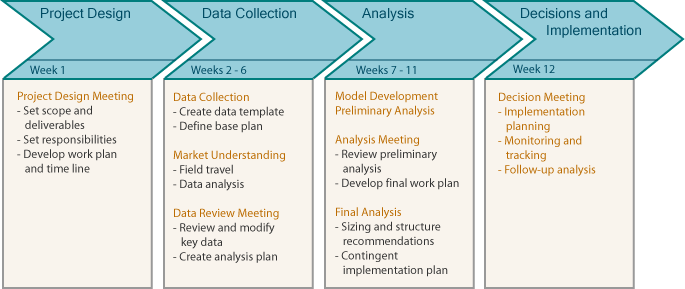
While RMCI customizes each sales force strategy project around
the client's unique needs, most projects do contain some common
elements. First, RMCI collects results and call activity data
necessary to begin modeling the client’s market. Then
we analyze historical data for trends and insights. We travel
with sales reps and first line managers to understand the
needs and issues specific to each market. Finally, we conduct
extensive scenario analysis using proprietary software, identifying
optimal resource allocation, key risks, decision triggers
and contingent implementation plans.
A 'typical' 3-month project is outlined below:
|
|

Optimal sales, profit, and share of voice strategies can be
accurately estimated
Resources are frequently not allocated to optimize sales or
profits
 Firms under invest in new product launches
Firms inappropriately reallocate resources from in-line products
to new products
Firms under invest in coverage of key customers
Frequent changes in deployment create unnecessary disruption
Lower sales
Reduced rep effectiveness
Lower customer satisfaction
Re-allocation of existing investment can significantly increase
sales and profits
Firms often have no systematic, comparable method of assessing
risk and opportunity across teams, businesses, or geographies
Limited competitive intelligence inhibits appropriate tactical
deployment
Organization structure often inhibits optimal sales resource
allocation
|
|

Based on our work with hundreds of sales forces worldwide,
we've identified several factors that predict sales effectiveness
success:
Our analysis often focuses on resource allocation across sales
teams, products, business units, and countries. One critical
component of any project is understanding the sales, profit
and market share implications of sales deployment plans.
A second important component is understanding the implications
of contingencies. For example, in likely, low and high sales
scenarios, what is the optimal sales team size? How should
a client prepare for and respond to a delayed product launch?
What is the best response to an increase in competitive promotion?
|
|
|
|
|


